


 Cart
Cart
 sales@molnova.com


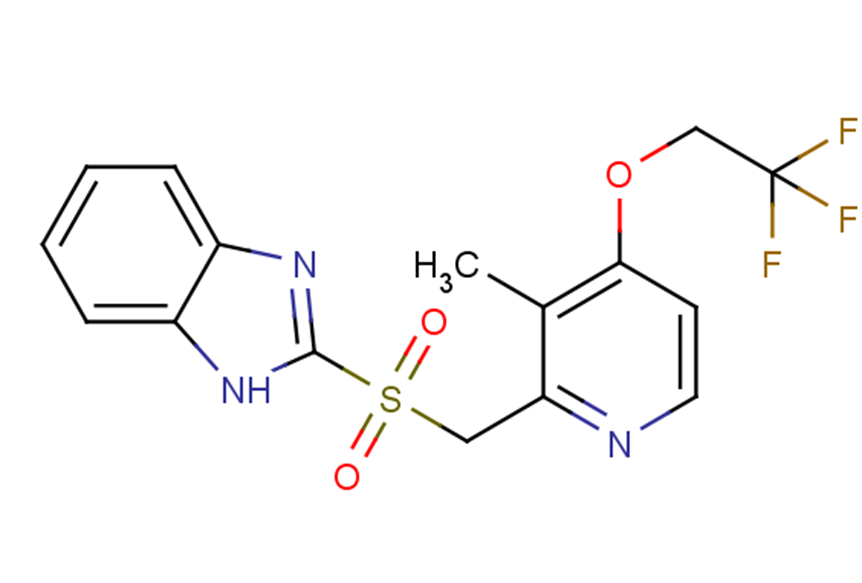
Lansoprazole sulfone
CAS No. 131926-99-3
Lansoprazole sulfone( —— )
Catalog No. M22591 CAS No. 131926-99-3
Lansoprazole sulfone is a metabolite of the gastric pump inhibitor Lansoprazole.
Purity : >98% (HPLC)
 COA
Datasheet
HNMR
HPLC
MSDS
Handing Instructions
COA
Datasheet
HNMR
HPLC
MSDS
Handing Instructions
| Size | Price / USD | Stock | Quantity |
| 5MG | 110 | In Stock |


|
| 10MG | 205 | In Stock |
|
| 25MG | 439 | In Stock |
|
| 50MG | 644 | In Stock |
|
| 100MG | 888 | In Stock |
|
| 200MG | Get Quote | In Stock |
|
| 500MG | Get Quote | In Stock |
|
| 1G | Get Quote | In Stock |
|
Biological Information
-
Product NameLansoprazole sulfone
-
NoteResearch use only, not for human use.
-
Brief DescriptionLansoprazole sulfone is a metabolite of the gastric pump inhibitor Lansoprazole.
-
DescriptionLansoprazole sulfone is a metabolite of the gastric pump inhibitor Lansoprazole.
-
In Vitro——
-
In Vivo——
-
Synonyms——
-
PathwayOthers
-
TargetOther Targets
-
RecptorOthers
-
Research Area——
-
Indication——
Chemical Information
-
CAS Number131926-99-3
-
Formula Weight385.36
-
Molecular FormulaC16H14F3N3O3S
-
Purity>98% (HPLC)
-
SolubilityIn Vitro:?DMSO : 250 mg/mL (648.74 mM)
-
SMILESCc1c(OCC(F)(F)F)ccnc1CS(=O)(=O)c1nc2ccccc2[nH]1
-
Chemical Name——
Shipping & Storage Information
-
Storage(-20℃)
-
ShippingWith Ice Pack
-
Stability≥ 2 years
Reference
1. Zhang D , Yang M , Liu M , et al. Pharmacokinetics of lansoprazole and its main metabolites after single intravenous doses in healthy Chinese subjects[J]. Xenobiotica, 2012.
molnova catalog



related products
-
4-Methyl-2-oxovaleri...
4-Methyl-2-oxopentanoic acid is an abnormal metabolite that arises from the incomplete breakdown of branched-chain amino acids. It is both a neurotoxin and a metabotoxin.
-
Glucosamine sulfate
Extracted from synthetic product;Store the product in sealed, cool and dry condition.
-
LX-4211 intermediate
LX-4211 intermediate a chemical compound.
